The Great British Class Survey published their results just in time for the British Sociological Association Conference. The news coverage was amazing and the survey is a great success.
But I wonder how the new seven classes map onto the already existing NS-SEC- which I was intrigued to note Savage and Devine used to check whether the BBC survey had reached relevant sectors (classes?) of the population. I was also puzzled that the names of some of the classes includes ‘workers’ when it is not meant to be an occupational classifcation.
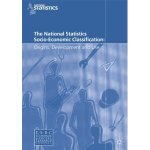
The National Statistics Socio-Economic Classification (NS-SEC)
The National Statistics Socio-economic Classification (the NS-SEC) is the social class grouping system (or variable) that is used for all official statistics and surveys since the 2001 Census. It replaced the previous class groupings, Socio-Economic Groups and Social Class based on Occupation (formerly known as the Registrar General’s Social Class). There are several versions of the NS-SEC. These are expanded and collapsed versions of the one that will be used by most people: the eight-class version.
 The NS-SEC Eight-Class Version
1. Higher managerial and professional occupations
2. Lower managerial and professional occupations
3. Intermediate occupations
4. Small employers and own account workers
5. Lower supervisory and technical occupations
6. Semi-routine occupations
7. Routine occupations
8. Never worked and long-term unemployed







 Karen O'Reilly
Leave a comment